
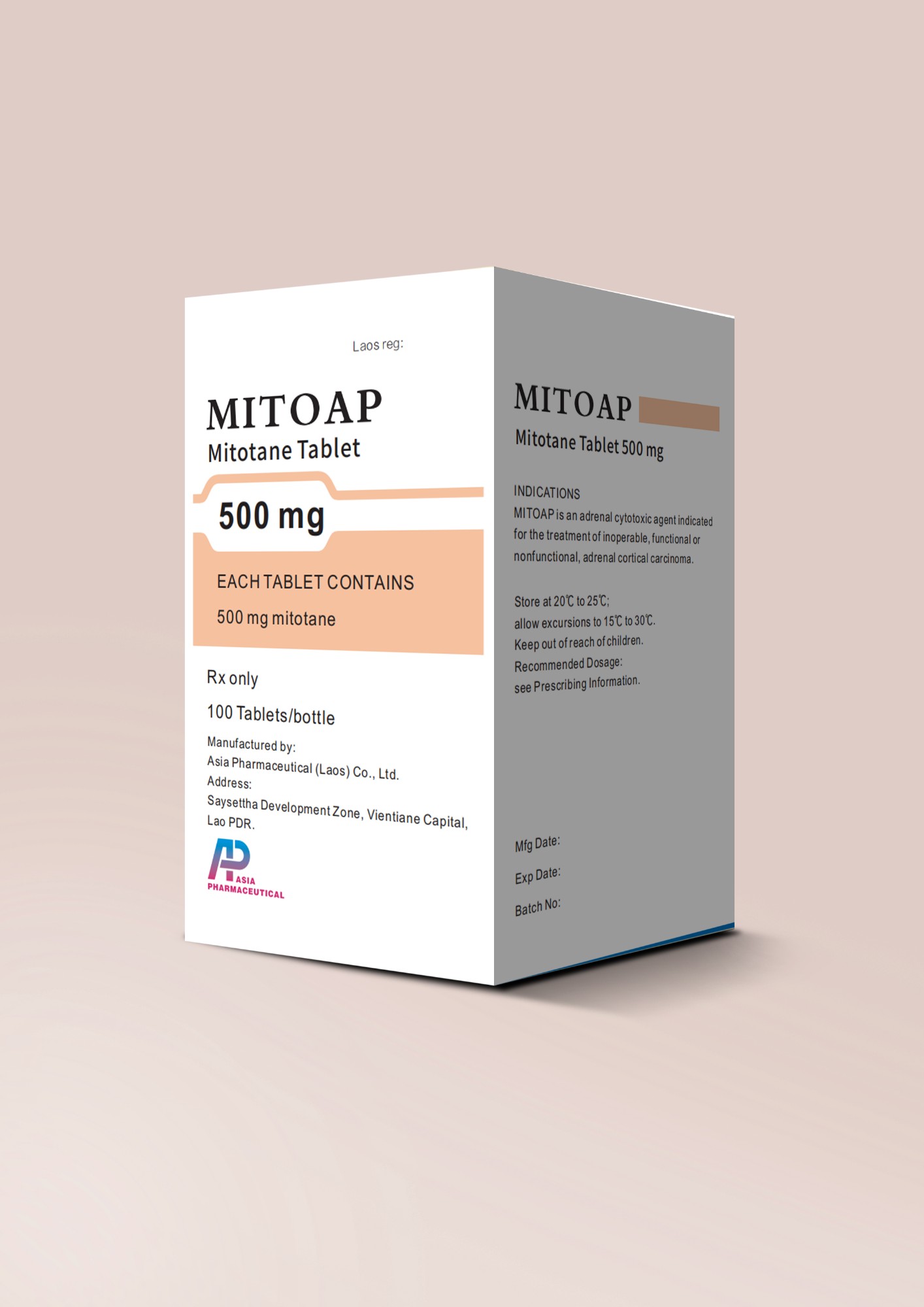
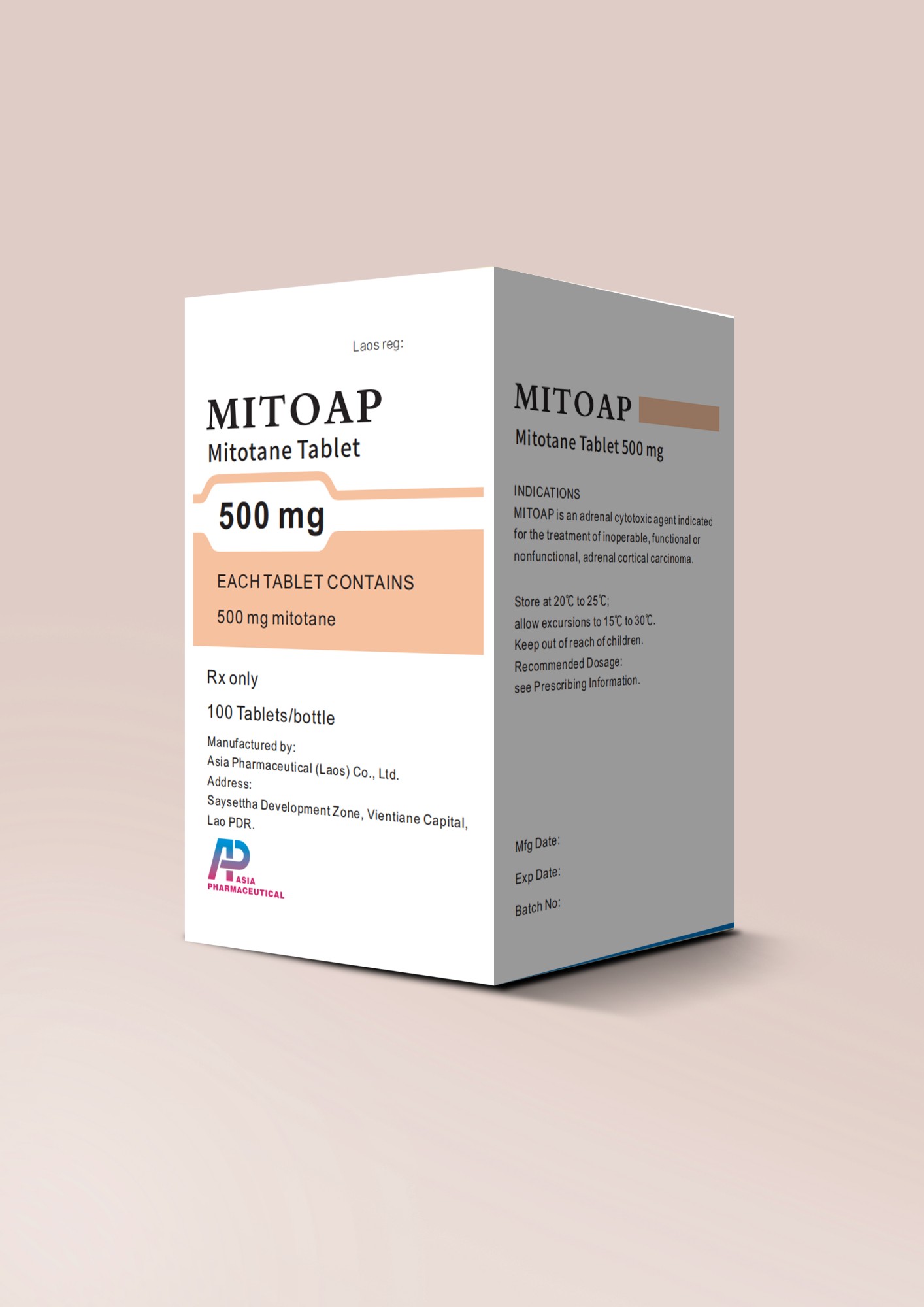
Mitotane Tablets
米托坦片
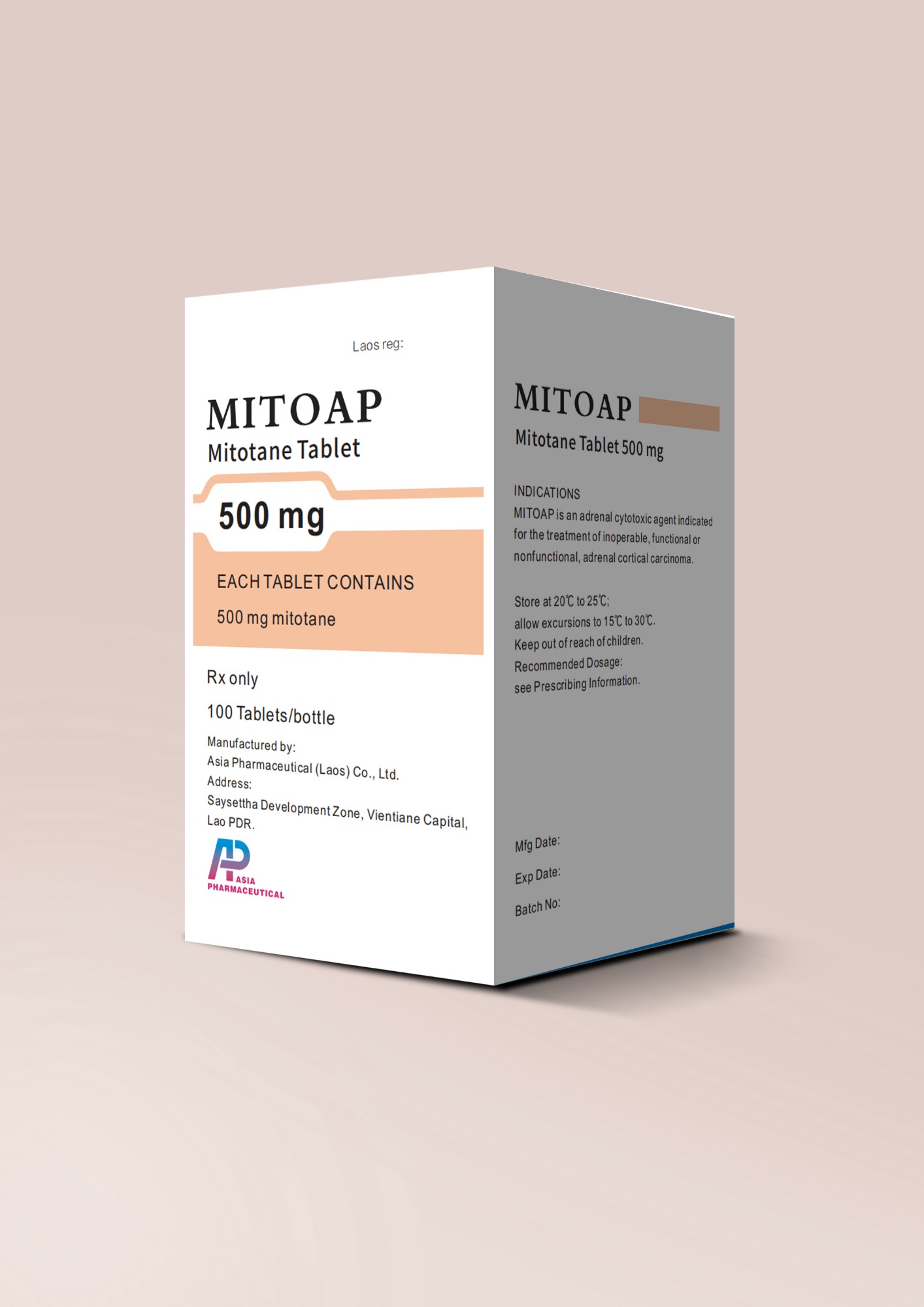
Strength: 500 mg
Pack size: 100 tablets/bottle
Mitotane is an adrenal cytotoxic agent used for the treatment of inoperable, functional or nonfunctional adrenocortical carcinoma (ACC).
Mitotane selectively affects cells of the adrenal cortex. Its exact mechanism of action has not been fully established, but it may directly suppress or destroy adrenal cortical cells and alter the peripheral metabolism of steroid hormones.
Treatment must be supervised by a physician experienced in cancer treatment and adrenal hormone management. Regular monitoring of mitotane plasma levels, adrenal function, liver function and neurological status is required.
Active ingredient
Each tablet contains 500 mg of mitotane.
Chemical name
1,1-Dichloro-2-(o-chlorophenyl)-2-(p-chlorophenyl)ethane, also known as o,p′-DDD.
Chemical formula
C₁₄H₁₀Cl₄
Molecular weight
320.04 g/mol
Water solubility
Mitotane is practically insoluble in water. It is soluble in ethanol.
Appearance
White, round, biconvex, scored tablets.
Storage
Store at 20°C–25°C. Excursions between 15°C and 30°C are permitted.
Keep the bottle tightly closed and protect the tablets from moisture. Keep out of the reach of children.
Excipients
Microcrystalline cellulose, polyethylene glycol 3350, colloidal silicon dioxide and starch.
● Take mitotane exactly as prescribed by the physician.
● Take the tablets orally with food. Taking mitotane with a high-fat meal may increase its absorption.
● Divide the total daily dose into three or four separate doses.
● Swallow the tablets with water. Do not crush or chew the tablets unless specifically instructed by the physician.
● Mitotane is a hazardous cytotoxic medicine. Caregivers should wear disposable gloves when handling the tablets.
● Avoid direct contact with crushed or broken tablets. If the powder contacts the skin, wash the affected area immediately and thoroughly with soap and water.
● If a dose is missed, skip the missed dose and take the next dose at the scheduled time. Do not take a double dose.
● If vomiting occurs after taking a dose, do not repeat the dose. Take the next dose at the scheduled time.
● Do not stop taking mitotane without consulting the physician because adrenal hormone replacement and dose adjustment may be required.
● The recommended initial dose is 2,000–6,000 mg daily, divided into three or four doses and taken with food.
● For 500 mg tablets, this corresponds to a total of 4–12 tablets per day. The exact dose must be determined by the physician.
● The dose should be gradually adjusted according to clinical response, tolerability and mitotane plasma concentration.
● The target plasma concentration is generally 14–20 mg/L.
● Mitotane plasma levels should generally be checked every two weeks after starting treatment and following each dose adjustment.
● After the target concentration is reached, plasma levels should continue to be monitored periodically, such as once monthly.
● Plasma concentrations above 20 mg/L are associated with an increased risk of serious neurological toxicity.
● Because mitotane accumulates in adipose tissue and has a very long elimination period, plasma concentrations may continue to increase even when the dose remains unchanged or treatment has been temporarily stopped.
● Most patients require corticosteroid replacement therapy. The dose of replacement steroids must be determined according to clinical symptoms and adrenal-function monitoring.
Common adverse reactions include:
● Loss of appetite, nausea, vomiting and diarrhea.
● Dizziness, vertigo, drowsiness, lethargy, confusion or impaired coordination.
● Adrenal insufficiency, which may cause severe weakness, fatigue, low blood pressure, nausea, vomiting or abdominal pain.
● Increased liver enzymes or other signs of liver injury.
● Decreased white blood cell or platelet counts.
● Prolonged bleeding time.
● Ovarian cysts in premenopausal women, which may cause pelvic pain or abnormal vaginal bleeding.
To manage treatment safely, patients are advised to:
● Take mitotane with food and divide the daily dose as prescribed to help reduce gastrointestinal discomfort.
● Maintain adequate fluid intake, particularly if vomiting or diarrhea occurs.
● Avoid driving or operating machinery if dizziness, drowsiness, confusion or poor coordination occurs.
● Attend all scheduled blood tests for mitotane concentration, liver function, blood counts and adrenal function.
● Inform the physician immediately about any infection, injury, severe physical stress or planned surgery.
● Tell the physician about all other medicines being used. Mitotane is a strong CYP3A enzyme inducer and can substantially reduce the effectiveness of many medicines.
Mitotane can suppress adrenal function and cause a potentially fatal adrenal crisis, particularly during shock, severe trauma or infection.
If a patient develops a serious infection, major injury, shock, severe weakness, persistent vomiting, dizziness, confusion or very low blood pressure:
● Contact a physician or emergency service immediately.
● Mitotane may need to be temporarily discontinued.
● Emergency corticosteroid treatment may be required.
Important: Mitotane is a hazardous prescription anticancer medicine. It must only be used under the close supervision of an experienced healthcare professional.